Get Ready! The Time Has Come.

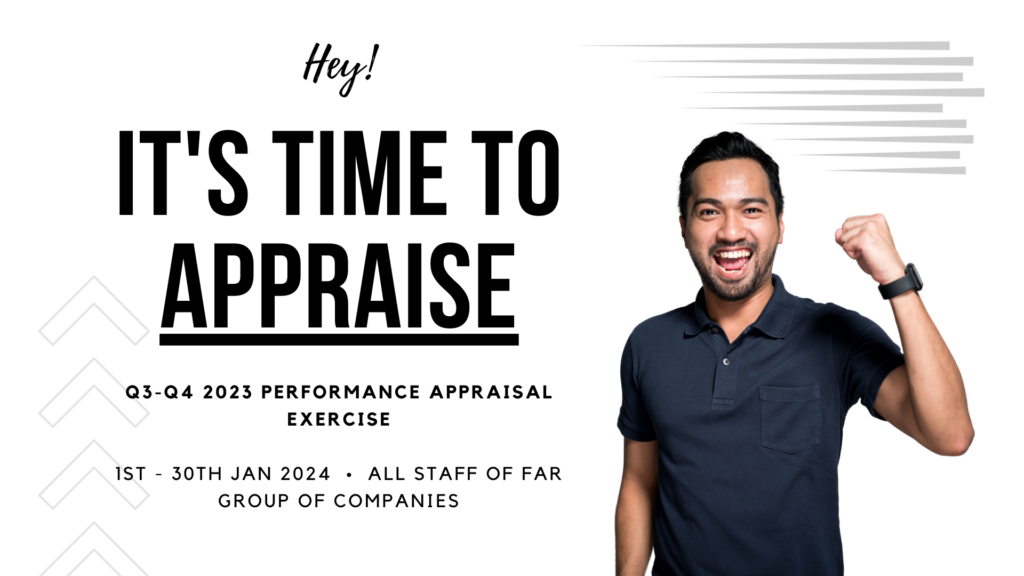
You heard it right. Its time for our Performance Appraisal Exercise.
As per our schedule, the appraisal period shall commence from 1st January 2024 and expected to finalize by early February. Since we have approached the final month of year 2023, its the best time to start discussion and wrapping up your performance progress report with your superiors.
Why performance review is important for everyone?
- Measure your performance progress and achievement made throughout the service duration.
- Getting to know your career progression based on what was expected and what has achieved so far.
- Identify areas that requires improvement and learn from mistakes.
- Justification from Management to reward best performers & retrain underperformers.
What is KPI? How can I measure them?
A Key Performance Indicator (KPI) is a measurable value that demonstrates how effectively a company is achieving key business objectives. It serves as a critical metric used to evaluate the success or performance of an organization, a particular project, or individuals within the company.
KPIs vary across industries and departments, focusing on the most important aspects of performance that directly relate to strategic goals. They provide a clear and quantifiable measurement of progress towards achieving specific targets, allowing businesses to track performance, identify areas for improvement, and make informed decisions based on data-driven insights.
Measuring Key Performance Indicators (KPIs) involves several steps to ensure accurate assessment and meaningful insights:
- Define Clear Objectives: Clearly define what you want to achieve with the KPI. Make it specific, measurable, achievable, relevant, and time-bound (SMART).
- Select Appropriate KPIs: Choose KPIs that directly align with your objectives and strategy. Ensure they are quantifiable and reflect success accurately.
- Collect Relevant Data: Gather data that corresponds to the KPIs selected. This might involve using software, surveys, tracking tools, or other data collection methods.
- Establish Baselines and Targets: Determine a baseline—where you are currently—and set achievable targets for your KPIs. This provides a benchmark for comparison and helps in assessing progress.
- Regular Tracking and Monitoring: Continuously monitor and track the KPIs using the collected data. This can be daily, weekly, monthly, or according to the specific timeline relevant to your KPIs.
- Analyze and Interpret Results: Analyze the data to understand performance trends, deviations, and any potential correlations. Interpret the results to identify areas for improvement or areas where strategies are working effectively.
- Take Action: Use the insights gained from analyzing KPIs to make informed decisions and take necessary actions to improve performance. This could involve adjusting strategies, allocating resources differently, or implementing new initiatives.
- Review and Adjust: Regularly review your KPIs to ensure they are still relevant and contributing to your objectives. Adjust them as needed to reflect changes in business priorities or strategies.
- Remember, the effectiveness of KPI measurement relies on the accuracy and consistency of data collection, the relevance of chosen indicators, and the action taken based on insights derived from these measurements.
Need help? Contact HR for more information.